Stress Relieving is a heat-treatment process used to reduce internal stresses that develop in metal components during manufacturing processes such as welding, machining, casting, forging, forming, and fabrication. In this process, the component is heated to a controlled temperature, held for a specific period, and then cooled gradually to minimize residual stresses without significantly changing the material's basic structure or mechanical properties.
Stress relieving helps improve the dimensional stability, machining accuracy, and service life of components. It is particularly useful for large and complex fabricated parts where residual stresses can cause distortion or dimensional changes during subsequent machining or operation.
Key benefits of Stress Relieving:
• Reduces residual and internal stresses
• Minimizes distortion during machining
• Improves dimensional stability
• Helps prevent cracking and deformation
• Improves machining accuracy
• Enhances component reliability and service life
• Suitable for welded, cast, forged, and machined components
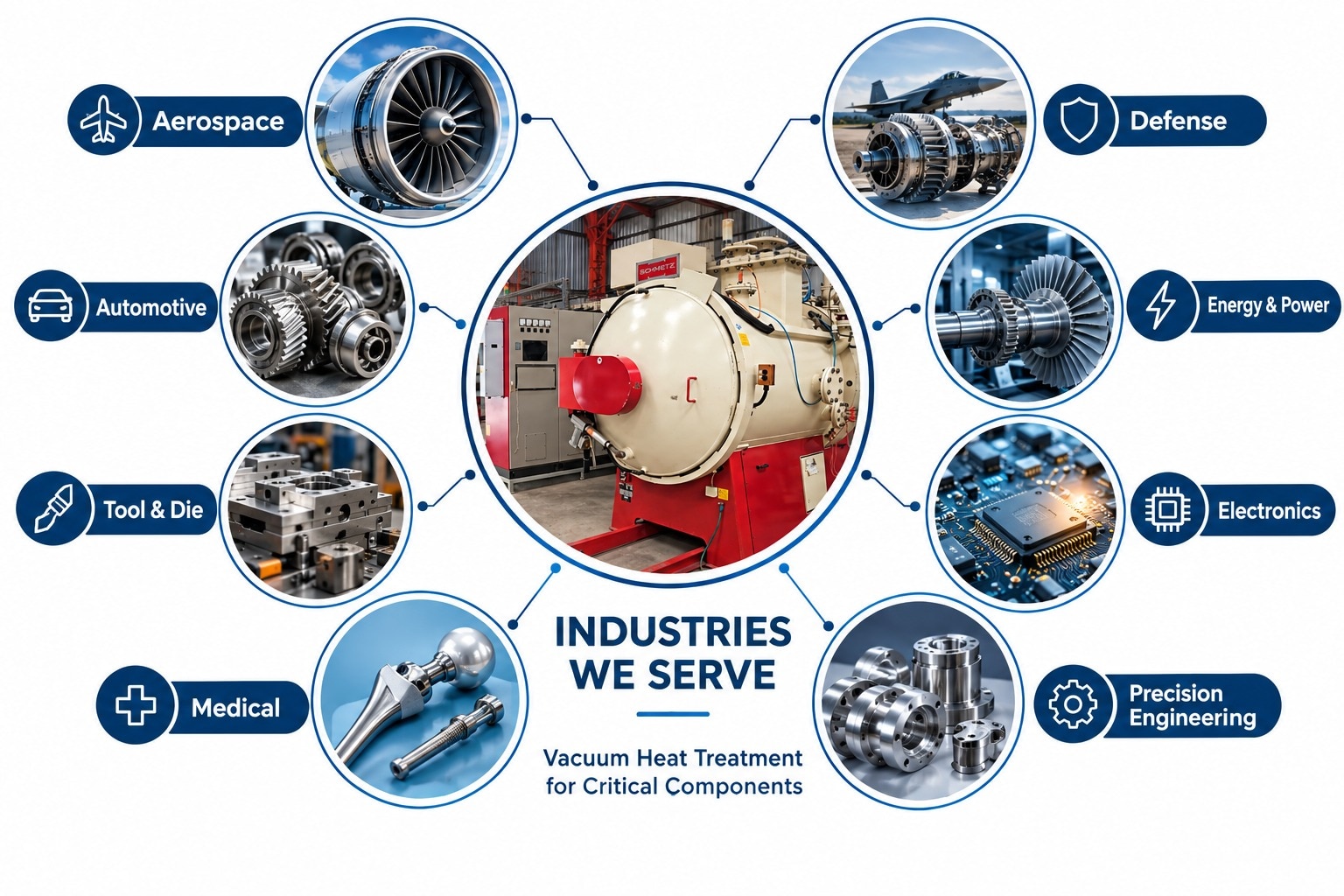
Applications: Stress relieving is commonly used for fabricated structures, welded components, pressure vessels, machine parts, shafts, gears, castings, forgings, dies, and precision engineering components where dimensional stability and controlled residual stress are important.
Send Enquiry